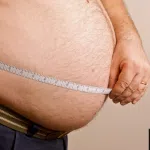


Body fat percentage is gaining more popularity as an effective marker of overall health and fitness instead of the BMI Index.
While I’ve written extensively about body fat percentage in numerous articles including:
I’m hoping this article will help tie everything together by creating visual representations of what a given amount of body fat looks like for men and women.I searched thousands of images in order to create this article. Most of the images I purchased from stock photography websites, but others are in the public domain (at least I hope). If one of these pictures is copyrighted, please let me know and I will list proper attributions, or replace it if need be.
ACE Body Fat Percentage Chart
This chart from ACE is one of the most commonly used body fat charts. Exercise AC. Ace Lifestyle & Weight Management Consultant Manual, The Ultimate Resource for Fitness Professionals . American Council on Exercise; 2009. (affiliate link)1
As you can see, women have a higher body fat percentage than men at a given level. This is because of physiological differences, including hormones, breasts, and sexual organs. In addition, women need a higher amount of body fat for ovulation.

“Essential fat” is the minimum amount necessary for physical health. There is a lot of controversy over what amount of body fat is optimal for overall health. A research paper in the American Journal of Clinical Nutrition concluded that specific low body fat ranges are “underfat,” which implies unhealthy.2
According to this paper, men between 20 and 40 years old with under 8% body fat are considered “underfat,” whereas a “healthy” range is between 8 and 19%. For women in this same age group, any level under 21% is “underfat,” and 21-33% is considered “healthy.” Body fat is an essential measure of health, but stating a specific body fat level is “unhealthy” doesn’t tell the whole story. In fact, some overweight people who exercise can be healthier than their leaner, non-exercising counterparts.3
Conversely, to imply that anyone below 8% body fat with exceptional fitness who eats well is “underfat”, or “unhealthy” is a stretch. We all have different shapes, sizes, and fat distribution profiles, but the chart above is a good starting point. The limitation of the ACE chart is that while it takes into account gender differences, it does not take into account your age, which is precisely why I included the following chart.
Jackson & Pollock Body Fat Percentage Chart

AccuFitness is the maker of a popular body fat caliper (affiliate link), a one-site skinfold body fat measurement method. When you buy the product, AccuFitness includes a body fat percentage chart based on research by Jackson & Pollock (which has become the industry standard) that, aesthetically and from a health perspective, is right on the money. If you don’t understand how to read this chart, find your age in the left-hand column, then see the corresponding body fat percentage to the right. For a 30-year-old man, a body fat percentage of around 12.7% is considered ideal.
You may have noticed that as your age increases, your acceptable body fat within these ranges also increases. Why, you ask? In short, these charts are based on statistical assumptions. Older individuals tend to have a lower body density for the exact skinfold measurements, which is assumed to indicate a higher body fat percentage. Older, athletic individuals, however, might not fit this assumption because their body density may be underestimated. Digging a little deeper, there are 3 types of fat:
- Subcutaneous (i.e. under the skin)
- Visceral (i.e. around the organs)
- Intramuscular (i.e. in between muscles, like a marbled steak).
Your subcutaneous body fat may stay the same, but the visceral and intramuscular fat may increase as you age.
Body Fat Percentage Terms
To best understand the descriptions in this article and how the pictures were chosen, here are some basic body fat percentage terms and concepts that are helpful to learn:
Body Fat Percentage – is the amount of body fat (lb, or kg) divided by total body weight listed as a percentage. For example, a 180lb man with 30lb of body fat has a body fat percentage of 16% (30/180).
Body Fat Distribution – We all have different body fat distributions, or how fat is distributed across our body. For example, some women may have very little body fat on their abs, but a lot on their thighs and triceps, while others will have the opposite. Same thing goes with men, but most men carry fat in their stomachs. I tried my best to show pictures that highlighted the stomach region for men and the hips/thighs/stomach region for women.
Body Shape -Similar to body fat distribution is we all have different body shapes, so two different body shapes may have the same body fat percentage even if they don’t look like it. A classic example is a skinny runway model may have the same body fat percentage as a fit, athletic women.
Age – The pictures in this post assume ages of around 25-35 years old. Most body fat measurement devices will reflect higher body fat levels as the age increases. For example, a 20 year old man and a 50 year old man may have the same subcutaneous body fat measurement (fat under the skin), but the 20 year old may be 15% and the 50 year old will be at 20%. As we age, fat around the organs (visceral) and within muscle (intramuscular) tends to increase and most formulas take this into account.
Muscle Striations – As an individual becomes more defined, the actual muscle can be seen more clearly, which looks like thin rods, referred to as striations.
Vascularity – This is the appearance of veins in different areas of the body as body fat decreases.
Body Fat Pictures Of Men

Men Body Fat Descriptions
3-4% | 7% | 10%| 15% | 20% | 25% | 30% | 35% | 40%
Body Fat Percentage Men 3-4%
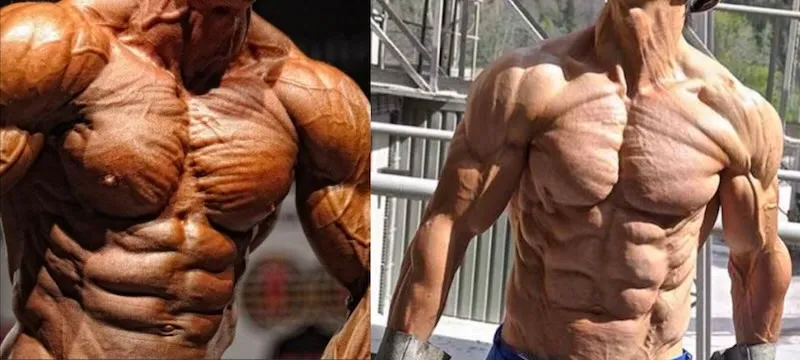
Bodybuilders can drop as low as 3-4% body fat when preparing for bodybuilding competitions. This body fat level is characterized by extreme vascularity, so that veins are visible over just about every muscle in the body. There is clear separation between muscles, and striations visible on almost every muscle.
The buttocks (I’ll spare you a back picture) even has striations, some vascularity, with little fat. If your buttocks doesn’t have any body fat, you’ve got VERY low body fat! Essential fat for a man is around 2%, which is the basic amount of fat a man needs for the body to function (fat protects internal organs in the chest and abdomen).
Body Fat Percentage Men 7%

Approximately 6-7% body fat for a man is a bit less extreme than competition bodybuilders, but it’s still hovering at a level that is not sustainable for most men. Around this level, or slightly less, the face becomes gaunt, and your family starts worrying about you.
This 6-7% body fat level, which is achieved by many male fitness models when doing photoshoots, is characterized by muscle definition in all muscles and clear vascularity in most muscles including arms, legs, and even abs. Vascularity over the abs muscle is a sign of very low body fat. Clear separation of muscles as well.
Body Fat Percentage Men 10-12%

This is a challenging, but sustainable level for most men where you should be able to see your abs, but they will likely not be as defined as a man in the 6-7% body fat range. This body fat range is the lean beach body look that most men want and many women love.
While not very defined, there is separation between muscles, some muscle striations potentially in the shoulders, or arms, but striations are not showing on every muscle. Vascularity is typically limited to the arms, with a little possibly on the legs.
Body Fat Percentage Men 15%

The 15% body fat level is usually within the “lean and fit” category in most body fat percentage charts. The outlines of muscle can be seen, but there is no clear separation between them.
Vascularity is usually a bit more limited as are muscle striations, which are typically covered by a thin layer of fat. The overall shape is still there, which can create an aesthetic appearance despite less muscle definition.
Body Fat Percentage Men 20%

Separation between muscles starts to blur, almost no vascularity, or striations can be seen, typically there is a small stomach pouch of fat, the look is “soft” but not very round. Most guys I come across in NYC are within the 20-25% body fat range. Other parts of the country, or world, that range may be skewed higher or lower. A 5’11”man who weighs 180lb and has 145lb of lean body mass (the average) will have 20% body fat.
Body Fat Percentage Men 25%

There is little to no separation of muscles, no vascularity, or muscle striations, waist begins to increase quite substantially with a waist to hip ratio as high as 0.9 (waist circumference/hip circumference). So a 5’10” man may have a 36+ inch waist. This man may have a little neck fat, but may not look like he has 25% body fat in normal clothing. Over 25% body fat for a man is considered obese, and over a 40 inch waist is considered abdominal obesity.
Body Fat Percentage Men 30%

There is more fat all around the body at the 30% level including waist, back, thighs, and calves. The waist looks larger relative to the hips, and the stomach will likely be protruding over the waist noticeably. There is no muscle separation.
Body Fat Percentage Men 35%

As men get heavier and heavier gaining more fat, most of the fat is funneled right in the stomach. The 35% level is characterized by more significant protrusion of stomach fat over the waist. This is the beer gut kind of look. Waist circumferences can be 40+ inches for a man with 35% body fat.
Body Fat Percentage Men 40%

Similar to the 35% level, even more fat accumulates in the stomach and waist region, so that waist sizes can approach 45 inches, or more. At this level, basic every day activities like walking up stairs, or bending over to pick something up becomes increasingly difficult. This body fat level is approaching morbidly obese, which is characterized by a BMI over 35. To put it in better perspective, a 5’11” man who weighs 270lb and has 160lb of lean body mass has 40% body fat.
Women Body Fat Descriptions
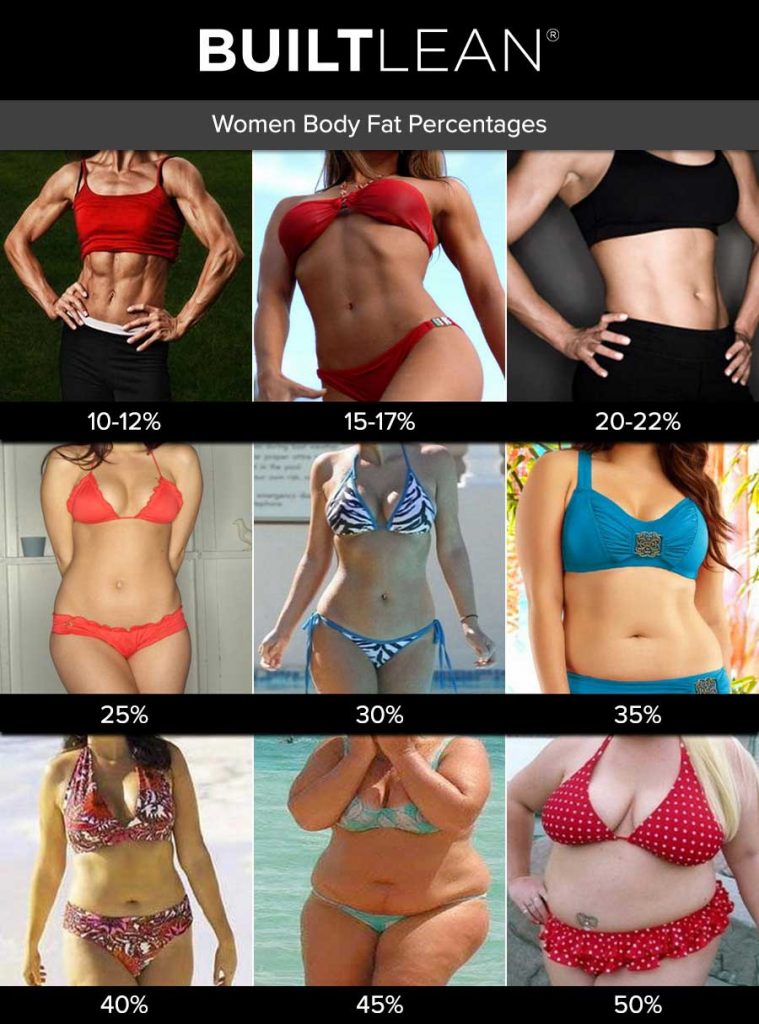
Body Fat Picture Descriptions Of Women
10-12% | 15-17% | 20-22%| 25% | 30% | 35% | 40% | 45% | 50%
Body Fat Percentage Women 10-12%
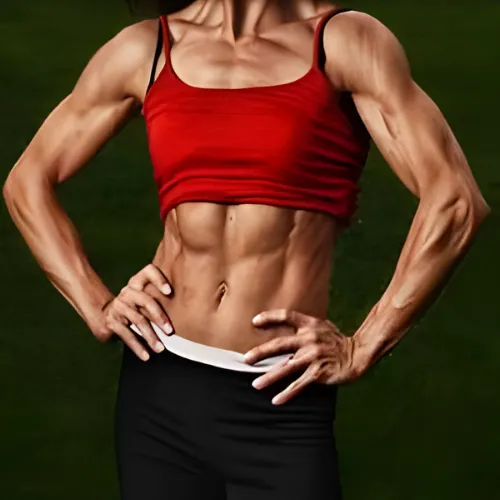
This is an extremely low body fat level typically attained by female bodybuilders. Essential fat for women is round 8-10% compared to 2% for men. Why the difference? Women have more fat in breast tissue and the area surrounding the uterus. This level of body fat is not considered safe, or healthy for women who will be unable to menstruate. Striations of muscle, separation between muscles, clear vascularity are all noticeable at this level. The women in the photo is likely at the higher end of the range at 12% body fat because she is not too vascular.
Body Fat Percentage Women 15-17%

This is still considered a very low body fat for women, which is similar to the 6-7% body fat for range men. Many bikini and fitness models will reach this body fat level and some may not be able to menstruate. Muscle definition in the abs, legs, arms, and shoulders is apparent, there is some vascularity and some separation between muscles. Hips, buttocks, and thighs generally have a little less shape because of the low body fat.
Body Fat Percentage Women 20-22%
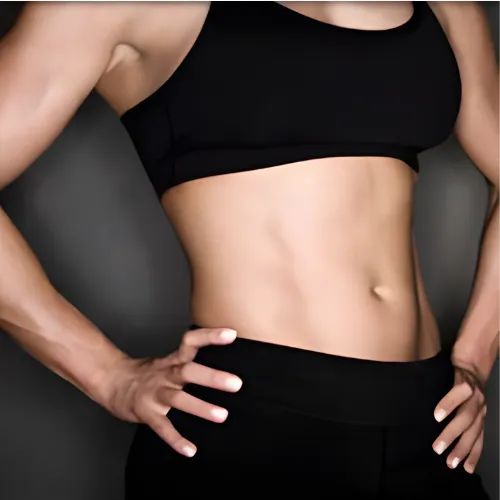
This is body fat percentage is usually in the “fit” category of most body fat charts and is typical of many female athletes. Some definition in the abs is apparent, there is body fat on the arms and legs, but it’s not too pronounced. There is minimal, but some separation between muscles.
Body Fat Percentage Women 25%

This is on the low end of what’s average for most women and is characterized by a shape that is neither too slim, nor overweight. Curves in the hips are usually more apparent along with more fat in the buttocks and thighs. A 5’4” women who weighs 130lb and has 97lb of lean body mass has 25% body fat.
Body Fat Percentage Women 30%

While most men have fat funnel into their stomachs, as the body fat of most women (but certainly not all) increases, this fat tends to accumulate in the hips, buttocks, and thighs. At 30% body fat, the hips, thighs, and buttocks are more pronounced and round. This is considered the high end of average for women in many body fat charts.
Body Fat Percentage Women 35%
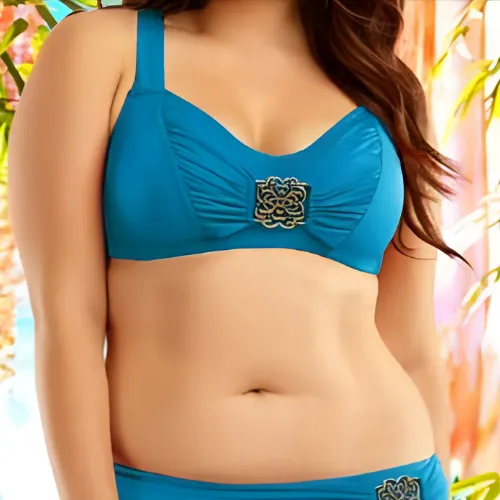
The hips become even wider at this level of body fat and the face and neck will appear rounder and more full. For a 5’4″ woman, hip circumference can start approaching 40+ inches and waist circumference of 32+ inches. Some belly fat may start protruding over the waist as well.
Body Fat Percentage Women 40%
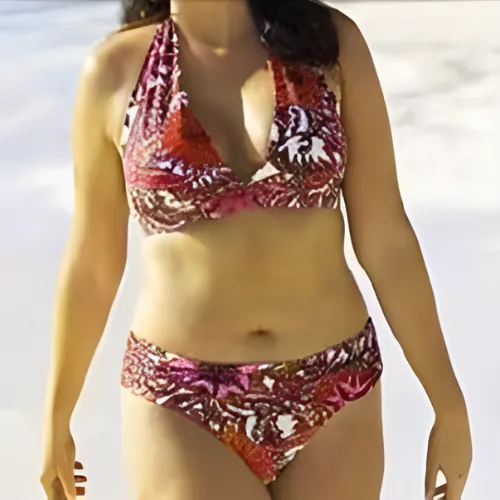
The hips and thighs grow larger so that hip circumference can reach 42+ inches, waist of 35 inches, and thighs over 25 inches for a 5’4″ woman.
Body Fat Percentage Women 45%
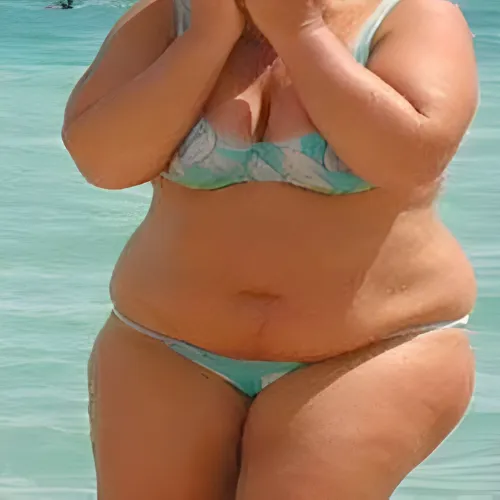
The skin may begin to lose its smooth appearance as more and more fat accumulates. Hip Circumference can may reach 45 inches+ and waist circumference 35+ inches. The hips may become noticeably wider than the shoulders.
Body Fat Percentage Women 50%
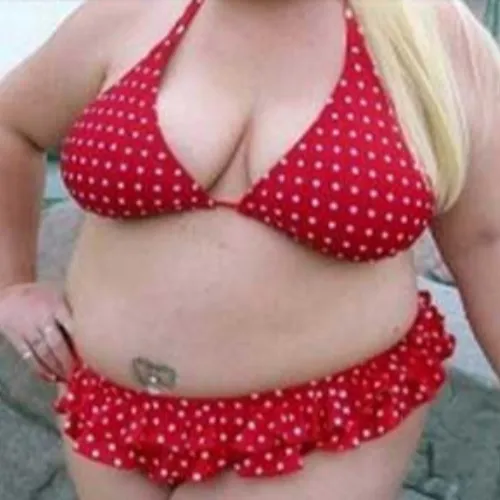
The will likely look like it has dimples more fat accumulates. Hip Circumference can may reach 45+ inches and waist circumference 40+ inches and thighs above 30+ inches. The hips will likely be noticeably wider than the shoulders. To put it in better perspective, a 5’4” women who weighs 200lb and has 100lb of lean body mass has 50% body fat.
Given how confusing measuring body fat percentage can be, I hope seeing these body fat percentage photos was helpful.
Have a question? Leave a comment!
So what’s a better metric than body fat percentage?
Waist size is a simpler and better health metric than body fat percentage or BMI. Even better is your waist-to-height ratio.4
Divide your waist by your height, which works in centimeters or inches. If your waist size is under half your height, that’s considered “healthy.” To measure your waist, measure 1 inch above the belly button. Measure after your exhale. Don’t suck it in! I hope this discussion of ideal body fat percentage was helpful for you!