
When it comes to strength training, building a strong grip is possibly one of the most neglected areas. In fact, in most cases it isn’t trained at all.
What you might not realize is that grip training does much more than provide you with a firm handshake, forearms like Popeye, and help you open that pickle jar.
The truth is that little bit of grip training goes a long way. It can pay huge dividends on all other areas of strength and fitness. For starters, poor grip strength is a hugely limiting factor when it comes to other exercises such as deadlifts, pull ups, lunges, rows, bench etc. When your grip strength improves, the rest of your lifts will follow suit.

Why Is Grip Strength Important For More Than Just Lifts?
If you’re interested in getting stronger, this is a no-brainer. It’s unlikely that you will ever have strong hands without a strong body, but there are lots of strong bodies out there without strong hands.
If you’re interested in decreasing body fat, lifting more weight during your workout means more calories burned.
Working grip exercises into your program can also aid in preventing certain pain syndromes from chronic inflammation to tendonitis, which is generally caused by neglecting certain muscle groups and overuse of others.
Also, through a process called irradiation, you may actually be strengthening other muscles from your wrist all the way down to your core with the most important being perhaps your rotator cuff muscles. An easy way to feel this working is to hold your hand out in front of you and make a fist. Now squeeze your fist as hard as you can and you should feel all the muscles in your arm and even your core tighten up as well. To utilize this during your training squeeze the bar during exercises like the bench press and deadlifts to instantly lift more weight and protect your shoulders!
5 Types of Grip Strength Exercises
There are several types of grip exercises that all train different muscle groups. Here, we will go over the most basic types of these exercises:
- Crush Grip: crushing is the action of closing your hand around something and squeezing. This would be what you do every time you hold onto a dumbbell. This is also called a “hand squeeze exercise”.
- Pinch Grip: pinching is the action of holding onto an object and squeezing with just your fingertips and not letting it drop. It can also be the act of pinching something together with just your fingertips (eg pinching a clothes pin….do people still use those?).
- Supporting Crush Grip: this is the act of supporting an object with a crush grip where you support most of the load with your fingers. Common examples are carrying a dumbbell, deadlifting or even carrying your grocery bags by the handle.
- Open Crush Grip: this is when you are using a crush grip but your fingers don’t quite touch or overlap. Fat bar or awkward object holds are great to train open crush grip. The real life carry over here would be an easier time opening jars (among other things) when your fingers are spread open. Having a strong open crush grip really comes in handy!
- Hand Extension: this technically isn’t a grip exercise in every sense of the word but it trains from the synergistic muscles to the ones you use for grip. This keeps a healthy muscle balance in your hands and wrists, which aids in preventing injury and overuse of those muscle groups. They will also help your actual grip strength improve!
Top 8 Grip Strength Exercises
Here are my 8 favorite grip exercises to use along with the type of grip they challenge:
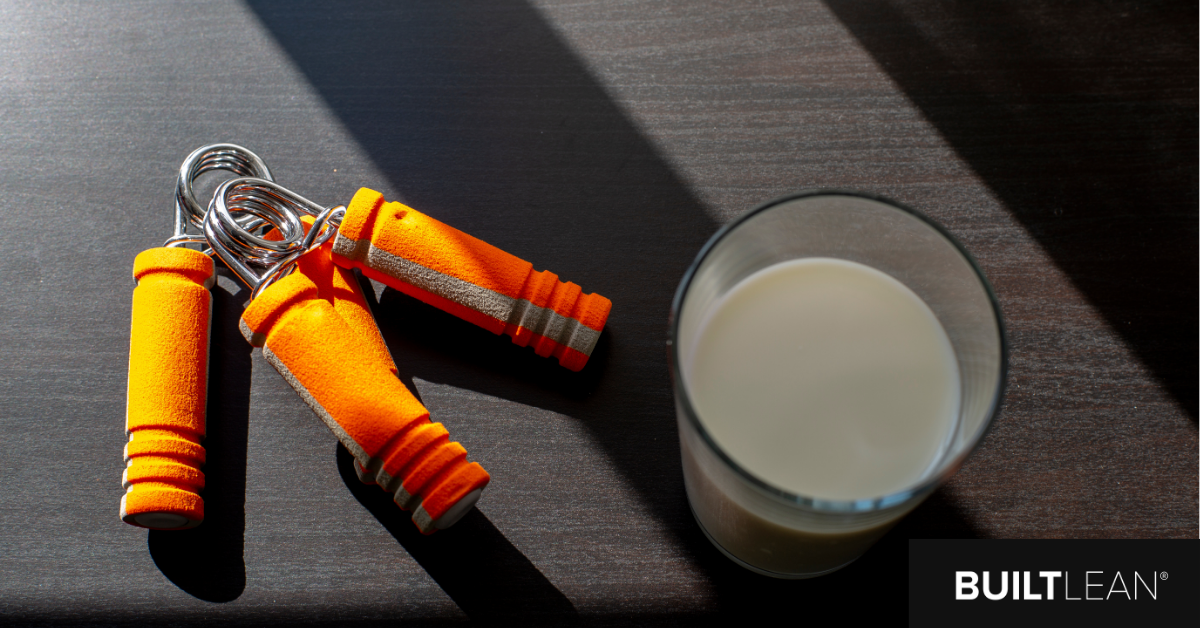
Hand Grippers

Using hand or torsion grippers is my favorite type of grip exercise and is easily one of the best ways to train your crush grip. Actual hand grippers should be very challenging to close, unlike the plastic ones that some of you may have seen back in the high school weight room. The most popular brand seems to be Iron Mind’s Captain of Crush grippers, which you can purchase on Amazon or on their website for about $20 each. These grippers come in a wide variety of tensions from 60lbs all the way up to the #4 which is a 365lb close!
You can train with hand grippers by going for repetitions and max close, or even holding a close for a set or max period of time. I recommend starting with first learning how to properly set and close a gripper as training with them requires a certain level of skill and strength. You should start off with 2-4 sets of 8-10 reps with a lighter gripper and work up from there.
Barbell Holds
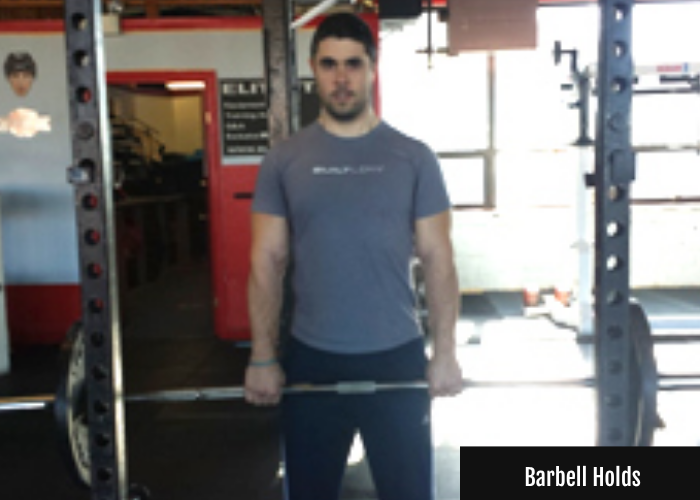
This is easiest to set up in a squat rack with the pins set just under where you would lock out a deadlift. The goal here isn’t to deadlift up the weight, rather to hold onto it, so a couple inches is totally fine.
Grab the bar with a double overhand grip at about shoulder width and then stand tall (e.g. deadlift lockout stance). The goal here is to hold for time and depending on your experience, 5-10 seconds will be perfect for most trainees. 3-5 sets should be more than enough to start!
Farmer’s Carries
Typically done with 2 dumbbells or kettlebells, Farmer’s Carries mean you stand up with the weights and walk a certain distance or for a period of time. This adds motion to your grip, so not only are your forearms challenged but so are your core muscles, shoulders, and hips. Try walking 20’ and progressing to 40’ with heavy weights!
Towel / Rope Pull Ups
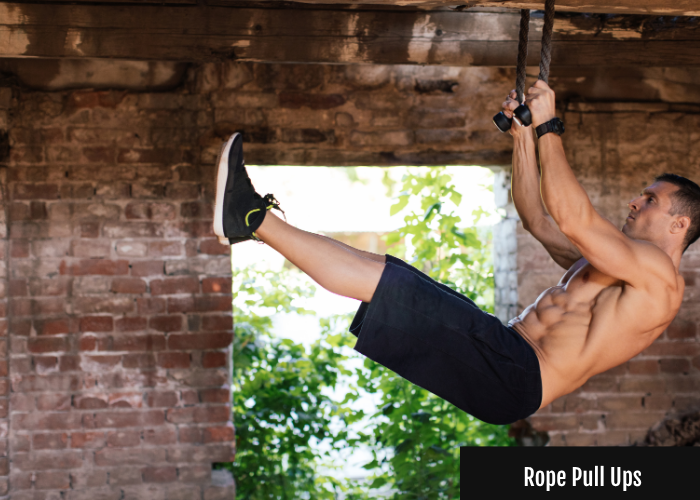
These do wonderful things for your grip and if your gym doesn’t have a towel service you can pick up a couple dish towels on the cheap. Simply drape the towels over a standard pull up bar, grip them tight and perform your regular sets of pull ups. They will be challenging at first but your grip will improve by leaps and bounds!
Plate Pinches

For pinch grip I usually recommend plate pinches, so all you need are two plates that are flat on one side that you can pinch together for time (flat side out). Starting out, pinch two 5lb plates for 30 seconds for a couple sets. If that gets too easy, then move up to two or even three 10lb plates.
Fat Gripz

One of the best bang-for-your-buck pieces of equipment when it comes to grip training is Fat Gripz (affiliate link) which can be used with any standard barbell, dumbbell or pull up bar. Unless you are Andre the Giant your hands shouldn’t be able to close around the Fat Gripz, allowing you to train your open grip.
I recommend using them periodically since this grip trains fairly easily and without as much constant attention. Once or twice a month add them your standard deadlifts and try doing both double overhand and alternating grip for heavy singles. They also work really well for chin ups and dumbbell rows as well.
Hex Holds
Hex dumbbell holds are another great way to challenge your open grip, provided your gym has hex style dumbbells. If you are serious about grip training you can purchase just the heads of the hex dumbbells from York (which they call ‘blobs.’).
All you do is hold the head of the dumbbell for 30 second holds. A couple sets is all you ‘ll need.
Band or Sand Hand Extensions
As I mentioned before, these aren’t grip exercises per say, but they will go a long way towards preventing injuries as well as strengthening your actual grip.
Band extensions can be done by placing a band around all 5 fingers (or even a couple at a time) and extending your hand outward for reps or for time. You can buy professional bands for this, but I recommend just using the thick band you get on a crown of broccoli, a thick rubber band, or even one of those rubber bracelets people wear.
Another great hand extension exercise can easily be done with a bucket of sand. Simply insert your hand with your fingers closed Karate Kid style and then extend your hand open against the pressure of the sand.
In my own personal experience, grip exercises have been the simplest addition to my strength training program and have yielded some of the greatest benefits across the board. It is always important to remember that you are only as strong as your weakest link. If that is your grip, why not start there!